As a mother of two young children in the early 2000s who worked from a home office, occasionally I would need a break.
A few hours out of the house on my own to remember who I was without any obligation to feed, clothe, wash, educate, entertain, or otherwise support someone else.
When possible, I’d go while the kids were at school. Most often my husband would take care of the kids for a few weekend hours so I could wander, shop, or just be.
During that me-time, I often found myself gravitating to a cavernous Barnes & Noble store in Framingham, Massachusetts.
I meandered the aisles. New Best Sellers! Staff Picks! Travel! Biographies! Historical Fiction! I picked up books or magazines that looked interesting, and nestled into one of their oversized armchairs to read.
Being among all those books buoyed my soul. My book and journal purchases were gifts to myself.
Somewhere around 2009, the store began to lose its allure.
First the toy section swallowed most of the front of the store.
Then the toys were displaced by two massive Nook e-reader kiosks. To get to the books you had to navigate around them.
I no longer exhaled in book zen upon entering nor felt the joy of discovering a book I wanted to read.
It made me sad.
Barnes & Noble went public in 1993 and launched their superstore concept. Their strategy involved besting competitors with their immense inventory and steep book discounts.
The strategy fueled the brand’s growth, from 520 superstores in 1999 to 726 in 2008.
More than 1,000 book shops closed between 2000 and 2008, though independent bookstores did not vanish.
And before long, the independents and Barnes & Noble shared a common enemy: Amazon.
In 1998, Amazon was 4 years old, and not yet profitable. Barnes & Noble did not see Amazon as a serious threat.
But Amazon proved better at the volume-and-discount strategy than Barnes & Noble were.
The Great Recession and Amazon’s rise forced a reckoning.
Borders bookstore chain succumbed in 2011, filing for bankruptcy and leaving Barnes & Noble as the sole brick-and-mortar counterweight to Amazon’s onslaught.
Barnes & Noble’s leadership made the mistake of trying to compete with Amazon where Amazon had decided advantages.
They launched the e-reader Nook in 2009 to compete with Amazon’s Kindle which came out in 2007.
They redid their website to stoke online sales.
A good website and an e-reader would be good for the brand, but these were catch-up moves required to compete in the industry, not pivotal forces that would turn the brand’s fortunes.
Barnes & Noble added toys, games, and other non-book related merchandise to stores.
They even tried opening restaurants adjacent to the stores to drive traffic.
To no avail.
Barnes & Noble began closing stores in 2010 and were down to 627 by 2019. Five CEOs cycled in and out between 2013 and 2018.
In 2018 the company lost $18 million and fired 1,800 full-time employees.
In 2019, the hedge fund Elliot Advisors acquired Barnes & Noble for $683 million. Elliot had purchased the British bookstore chain Waterstones the year before.
Waterstones’ CEO James Daunt had rescued that brand years earlier.
Daunt was a bookseller himself, having opened his own independent store in London in 2005, specializing in books for travelers. Daunt Books is still in business and has six stores.
Elliot named Daunt Barnes & Noble CEO as well. Daunt relocated to New York and got to work.
Daunt’s audit of Barnes & Noble yielded his assessment that the stores were “crucifyingly boring.”
In a 2020 keynote address to the Book Industry Study Group, Daunt said bookstores justify themselves in the age of Amazon:
“by being places in which you discover books with an enjoyment, with a pleasure, with a serendipity that is simply impossible to replicate online. And to do that, you have to have a good bookstore.”
For Barnes & Noble, Daunt sought to “create an environment that’s intellectually satisfying—and not in a snobbish way, but in the sense of feeding your mind.”
I felt seen when I read that.
Six months into Daunt’s tenure, the pandemic struck. All 600 Barnes & Noble stores had to close. Instead of panicking, Daunt initiated a transformation.
Stores were redesigned and refreshed.
Daunt asked employees to scrutinize each book in their store and decide if it belonged there.
He decentralized book buying and empowered local store managers to craft their offering mix. He encouraged managers to curate selections based on their interests.
More shocking, Daunt ceased taking publishers’ promotional money. This amounted to millions of dollars, but obligated stores to push publishers’ favored books via displays and discounts instead of promoting what interested customers.
Daunt’s approach is working.
Sales in 2021 exceeded pre-pandemic levels and have continued to grow. Barnes & Noble opened 16 new stores in 2022, and expects to open 30 in 2023. Some new stores occupy locations where Amazon’s brick-and-mortar bookstores failed.
As I read several excellent articles on Barnes & Noble’s turnaround, I noticed writers dancing around the edge of the reason for Daunt’s success, but missing the bullseye.
Ezra Klein in The New York Times chalked Daunt’s success up to his focus on empowering local store managers.
Elizabeth Segran in Fast Company credited Daunt’s encouraging local managers to curate selection based on their own tastes as the definitive factor.
Ted Gioia got closest, saying “the key element uniting all of this is putting books and readers first, and everything else second.” He said the lesson here was if you want to sell books, you have to love them.
Loving books helps, but that isn’t the reason Daunt’s approach is working.
The real reason is common sense marketing: He focused on the target audience.
To do that, he had to know them.
He knew book buyers:
Daunt also understood:
It was not Daunt’s love of books driving Barnes & Noble’s turnaround. It was his courage to prioritize and protect the target audience, readers.
I suspect Daunt knows most bookstore managers and employees are also readers, making them part of the target audience. Their passion for books motivates them to work there.
You knew that too, right? If not, go rewatch You’ve Got Mail.
If your brand is struggling or underperforming, pull from Daunt’s playbook.
Focus on your ideal customers. Daunt isn’t refashioning Barnes & Noble for the guy who needs a technical manual on how to wire your house and makes a one-time buy from Amazon. He’s building around book-buying enthusiasts.
Understand your ideal customers. Daunt loved books and was already a bookseller in touch with his market.
You don’t have to be a prime user of the product your brand sells, but you need to know who your ideal customers are and what they seek. Lego CEO Jørgen Vig Knudstorp consulted both child and adult Lego enthusiasts as he turned the company around in 2005 and kept in touch to fuel the brand’s growth.
Ditch the old customer segmentation framework of starting with demographics.
Seek deep understanding of customers’ mindset, the needs and problems they have, the experience they seek, and the emotions that accompany that experience.
Localize your marketing. Daunt knew that each bookstore’s community differs in profile and tastes, even within the same city, and enabled managers to cater to their specific market.
When you tailor your offerings to the local community, they feel recognized and understood, and respond with their business.
Engage employees. Daunt empowered managers and employees because he recognized them as Barnes & Noble’s face to customers. Their direct contact positioned them to know their customers best.
Your sales people, account managers, customer service representatives – any brand team member who interacts with your audience – are the face of your brand.
Tap their knowledge. Empower them. Motivate them. Customers’ experiences with them become your brand in their mind.
Deliver a unique experience. Emphasize what you can deliver that your competitors can’t.
Barnes & Noble’s customers come for the experience of exploring and lingering, finding books that interest them, and consulting employees they get to know.
Amazon can’t deliver any of that.
Resist bad influences. Forget Jerry Maguire. If someone shows you the money, but requires actions that are off-brand or inconsistent with delivering your best customer experience, pass.
Daunt’s prioritizing customer preferences over publishers demand-laden cash offers was another way he helped Barnes & Noble say to their audience we get you.
You don’t have to love the product your brand sells to be an effective CEO. You have to focus on your key customers, serve them, and protect their interests.
Barnes & Noble closed their Framingham store in January, but are opening a new one in my town this spring. I’m looking forward to checking it out!
Do you have any book recommendations?
Where do you go for me-time?
How does your brand demonstrate your understanding of your customers?
Please let me know in the comments below.
***
I may have had a little too much fun searching SNL for related skits.
See how hands-off Amazon’s retail service got. (2 minutes, 30 seconds)
Watch Looks at Books author interview with original cast members Gilda Radner and Jane Curtin. (2 minutes, 53 seconds)
Visit The Scorched Corset bookstore. (4 minutes, 6 seconds)
Hear RuPaul’s different definition of reading at The Library. (5 minutes, 20 seconds)
Enjoy!
For decades M&M’s conjured memories of focus groups for me.
During my years in consumer insights departments (aka marketing research) for Veryfine Products and Dunkin’, I sat behind the mirror watching customers react to new product ideas, ad campaigns, and new store designs.
To welcome clients, focus group facilities stocked the back rooms with an array of soft drinks and snacks.
A bowl of M&M’s was de rigueur. Sometimes multiple bowls, both plain and peanut flavors.
It’s easy to lose track of how many you nibble during a two-hour session.
But your scale knows.
I quickly learned to stake out my seat and move those bowls as far away as possible.
I hadn’t given M&M’s much thought until my friend Mark Schaefer asked me to provide a brand perspective on their recent hullabaloo in an interview for his online community.
After watching M&M’s marquee 2023 Superbowl commercial, my friends Dominic and David insisted I write about the trainwreck.
Who am I to deny a request?
Okay folks, as Maria sings in The Sound of Music, let’s start at the very beginning.
M&M’s launched in 1941 as military rations. Their hard candy shell enabled soldiers to carry chocolate in warm weather.
Ask anyone over age 40 about M&M’s and we’ll tell you they “melt in your mouth, not in your hand.”
M&M’s adopted that tagline in 1954, likely inspired by the military purpose. Commercials showed mothers happier with M&M’s because they did not cause the mess of other chocolate candies.
Were civilians worried about messy chocolates? Who knows?
The tagline’s claim became both brand differentiator and purpose.
M&M’s introduced their spokescandies, red and yellow cartoon characters, in 1960.
By 1999, there were 5 computer-generated figures: red, yellow, orange, blue, and green. Each had a distinct personality.
Red was bossy.
Yellow was a peanut M&M and portrayed as dim-witted.
Orange was anxious.
Blue was confident.
Green was the only female in the group. She was a diva, depicted as “sexy,” and sported go-go boots.
The last use of the tagline I can find is this 1997 ad with the spokescandies as guests on Dennis Miller’s talk show.
Forty-three years with one tagline. Impressive.
In 1998, M&M’s marketing team must have decided people no longer worried about chocolate melting in their hands.
Just like that, the tagline melted away, taking the product’s differentiation and purpose with it.
A close look at M&M’s ad campaigns over the next 20 years shows a brand having an identity crisis.
1998: “Official candy of the new millennium.” MM are the roman numerals for 2000. Get it?
2001: “What is it about the green ones?”
2002: Contest to choose a new color to add to M&M’s bags – purple won.
2004: “Chocolate is better in color.”
2007: “There’s an m in everyone.”
2011: “Can’t resist m.”
2012: Ms. Brown introduced during Superbowl 2012 as “Not your average chocolate.” Ms. Brown was confident, strode in stilettos, and wore smart eyeglass frames.
2017: Clean energy promotion
2018: “Always fun.”
As I mention in my book, Teenage Wastebrand, brand identity is a combination of purpose and attributes.
On January 21, 2022, M&M’s announced their mission (aka purpose) “M&M’S® promises to use the power of fun to include everyone with a goal of increasing the sense of belonging for 10 million people around the world by 2025.”
This new purpose set them up with two obvious brand attributes: fun and inclusive.
M&M’s implemented several initiatives:
M&M’s also tweaked some spokescandies in January 2022, seemingly in support of their mission.
Red became nicer.
Orange embraced his true self, worries and all.
Ms. Brown lost the Ms. and traded her stilettos for pumps.
Green swapped her go-go boots for sneakers.
Changes to the female characters, Brown and Green, caught conservative commentator Tucker Carlson’s ire.
"M&M's will not be satisfied until every last cartoon character is deeply unappealing and totally androgynous," Carlson said. "Until the moment when you wouldn't want to have a drink with any one of them. That's the goal. When you're totally turned off, we've achieved equity. They've won."
In September 2022, M&M’s introduced Purple spokescandy, a female, peanut M&M designed “to represent acceptance and inclusivity.”
When a limited-edition pack came out in January 2023 featuring only the female characters and supporting “women out to flip the status quo,” Carlson chimed in again.
He called Purple “an obese and distinctively frumpy M&M” and chided Orange for “becoming a poster boy for the mental-health crisis.”
It’s no mistake that the mission announcement and the limited-edition women’s initiative pack both came in January.
M&M’s are a long-time Superbowl advertiser. Generating buzz around the brand prior to the game helps them get publicity and more mileage from their Superbowl ad spend.
Both the spokescandy changes and Carlson’s outbursts stoked the PR fire. Hundreds of media covered the controversy, including CNN, Vox, Fortune, Forbes, The New York Times, The Washington Post, and The Guardian.
M&Ms kept mum to the hoopla in 2022.
On January 23, 2023, after Carlson’s second outburst, M&M’s announced the spokescandies were taking “an indefinite pause” and SNL alum Maya Rudolph would replace them as spokesperson.
A message from M&M'S. pic.twitter.com/EMucEBTd9o
— M&M’S (@mmschocolate) January 23, 2023
Tucker Carlson declared victory. Pundits and commentators hypothesized why they would do this.
Five days later, the indefinite pause proved to be a publicity stunt. M&M’s assured the world the spokescandies would be back with an ad during the Superbowl.
The public was primed for a major M&M’s statement on inclusion or at least an entertaining commercial. They received a lame mock ad for clam-flavored M&M’s.
The spokescandies addressed their return in an ad that ran AFTER the Superbowl game was over. Three spoke, but said nothing about inclusion.
While it is true that a brand identity sets direction for marketing communications like advertising, it does more than that.
A brand’s purpose serves as a North Star for the entire organization. It determines strategy and initiatives, guides employees in decision-making, and shapes company culture.
Employees want to work for a brand with a purpose they believe in.
But a brand purpose only succeeds if the company embraces it and is willing to defend it.
Otherwise, it’s lip service.
M&M’s used their purpose to fund a few initiatives, create a sensitivity board, tweak their spokescandies, and generate publicity.
When public discourse didn’t go as planned, the company recoiled and used the moment for another publicity stunt.
Their commercials seemed to say don’t take us seriously.
Two days after the Superbowl, M&M’s announced they were celebrating the official return of the spokescandies by doubling the number of $10,000 grants offered to “change-making women” from 10 to 20, “putting the ‘fun’ in funding their initiatives while increasing the opportunity for trailblazing women to champion a positive impact on society.”
M&M’s PR team generated lots of free press coverage, but the brand has taken a big hit on their credibility.
Their actions have left me wondering:
I’m betting many M&M’s customers are wondering too. M&M’s may be repelling people more than making them feel included.
If M&M’s believe they are uniquely poised to use fun to promote inclusivity, then they should lean into it, not shy away when controversy hits.
Begin in house. The first people M&M’s should make feel included are their employees. They need to feel the fun and inclusion before they can help the brand demonstrate that to the world. If M&M’s culture isn’t fun and inclusive, no campaign can convince the world the brand is.
Stand up for your beliefs. View Tucker Carlson’s commentary as more than just publicity. It’s challenging the brand’s identity. Bark back.
Let your identity guide you. If you are fun and inclusive, those attributes should guide your message and voice as you support and defend your purpose.
Demand your creative team meet the challenge. Ask your agency to craft a response, not a retreat. Red used to be bossy and is now nicer. Maybe he could address the situation via what he has learned about kindness and inclusivity, in a fun manner of course.
Involve Maya Rudolph. A casualty of M&M’s publicity seeking is their underutilization of the veteran comedian. Not only is she a fun, fabulous talent with the right demeanor to help M&M’s mission, but she is also Black and Jewish, embodying the brand’s attributes.
Accept that not everyone will agree. This is where many brands struggle. To have a purpose means to stand for something. Not everyone will agree. It’s ironic, but standing for inclusion may deter some people.
Using fun to promote inclusivity is a great idea. I hope M&M’s can implement it beyond publicity stunts and donations, and not melt when challenged.
What was your reaction to M&M’s marketing hullaballoo?
***
Check out this much better Superbowl commercial from 2021 – already on the fun and inclusive trail a year before they announced their new mission.
Every summer I go berry picking at least once.
This year my husband and I picked blueberries on an August Saturday at Tougas Farm in Northborough, Massachusetts.
During the two hours we were in the field, I reveled in the berry-picking crowd.
Entire families picked berries together.
Parents with toddlers chatted with them as they picked, asking questions about what they were seeing. Their banter warmed my heart.
Strangers smiled at each other. Conversed.
No one was on their phone.
No one rushed.
Everyone spent several minutes picking from an individual blueberry bush before moving on.
What a serene and focused atmosphere.
It wasn’t just that it was Saturday or a sunny August day.
People were deliberate and unhurried because berry picking rewards patience.
Blueberries are small. It takes many to fill a quart container.
That can be daunting when you get to the field and see the first photo below.


At first, green leaves dominate your view. Few ripe berries appear initially, perhaps the three circled in red in the picture above.
If you rush, you pick those three and move to the next plant.
If you study the plant, you see several berries in the background, partially obscured by leaves, where the red arrows are in the picture above.
Looking closely multiplies your berry opportunities. If you move the leaves near those red arrows, you find clusters of berries where only a few were visible initially.
And if you stay long enough to move aside leaves where berries were not visible, like in the yellow rectangle section of the picture above?
Look what you could find:

Patience allows you to see what others miss. Rushed pickers don’t push aside inner leaves. They forget to look up or crouch down.
Ironically, rushed pickers spend longer and expend more energy collecting berries than those who take time to explore the plant in front of them.
The tenets of good berry picking apply to developing a niche for your business.
Powers of observation, assessment, patience, and care all come into play.
Like approaching a blueberry bush, it takes time to get insights into a niche market.
Prospects need to know, like, and trust you before they will buy from you. Many won’t reveal themselves until they have observed and assessed your brand.
You need to build relationships with them.
Rushing the sale before your prospect is ready can turn them off. Like an underripe berry carelessly picked, your relationship may never ripen to the point where your prospect becomes a customer.
It takes self-discipline to wait until the right moment to make your offer.
As experienced pickers can return again and again to a few bushes to fill their containers, business owners who invest in developing a niche can find it will sustain their business for years.
Not every business owner has the patience and self-discipline to develop a niche.
Many business owners fear a niche won’t be big enough to support their brand’s growth.
The time niches take to germinate stokes that fear.
But if you can weather the initial years it takes to establish your brand’s niche, it can pay off for decades.
Examples abound.
Founded in 1980, Whole Foods focused on organic food before it was fashionable and operated in Austin, Texas for four years before expanding to the Houston area. When the company went public in 1992, it had 12 stores across four states: Texas, California, Louisiana, and North Carolina.
When Amazon purchased Whole Foods in 2017 for $13.7 billion, the company had 460 stores, presence internationally, and 87,000 employees.
Powell’s Books has focused on selling used and new books in Portland, Oregon for 50 years. Their annual revenue has grown to $111 million and they are a third-generation family-owned company.
Furniture by Penn has provided handcrafted, custom-made furniture made from sustainable materials to customers in Southern Ireland for 48 years.
Vermont Wooden Toys has produced local wood products for 51 years. Despite an outdated website, no social media marketing, and only recently accepting credit cards, orders are still booking four months out.
Kerrygold has sold milk products since 1962. A global Irish brand, Kerrygold hit revenues of €1.3 billion in 2020. Their butter is the top seller in Germany and the number two brand in the U.S. I enjoy their Dubliner cheddar cheese.
Vineyard Vines began their preppy vacation-wear company by selling colorful, irreverent, island-inspired print ties on Martha’s Vineyard in 1998.
They crossed the $1 million sales mark in three years, helped by a $400,000 order from Aflac for ties with their iconic ad campaign duck. Dun & Bradstreet estimates their current sales a $1.5 billion.
A niche is a sustainable business strategy and among the best ways to differentiate your brand. Every brand above is well-known for their niche and a go-to for their target audience.
They became known through years of commitment to their niche.
Do you have the patience to develop your niche?
Take a page from their play book and that of expert berry pickers.
Survey the terrain. Assess your potential niche like an experienced picker would choose a blueberry bush.
How big is the market? Who are the players? What does the target audience seek? Does your brand offer something truly different and desired?
Choose an ample-sized, underserved niche where your offering is unique. Ample means big enough to help your brand grow for at least several years.
Kerrygold’s butter and cheese get their unique flavor from cows’ milk enhanced from the cows’ consumption of Ireland’s rich and sweet grass. That’s hard to replicate.
Look beyond the obvious. Just as you need to get close and move leaves to see the true bounty of a blueberry bush, your niche knowledge gathering requires deep insights.
Talk to customers about the circumstances that prompt them to seek your brand, the ways they use your offerings, the experience they have buying from you. Identify opportunities to serve them better and improve their outcome.
Powell’s launched their website and began selling books online in 1994, a year before Amazon and three years before Barnes & Noble starting selling online.
Demonstrate your commitment. Speak specifically to your ideal customer in your marketing. Show them you understand their challenges, that your brand can deliver their desired outcome. Adapt as your customers’ needs evolve.
Vermont Wood Toys honored their buyers’ desire for all-natural products when they stopped using external stains and sealers in 2015.
Vineyard Vines features their employees and customers on their website as the “Real Good People” part of their “Our Story” page.
Be patient. Build relationships. Get to know your target market by taking a genuine interest in them and connecting with them often. Gain their trust. Focus on serving them long term.
Repeat business is cheaper to gain, more profitable, and more fulfilling than a succession of one-time sales. Like expert blueberry pickers who fill their containers over and over from a few abundant bushes, your patience will be rewarded.
Furniture by Penn aims for this explicitly: “By specialising in lifelong customer relationships, Furniture by Penn thrives to support you at every step of your home making journey.”
It’s easy to envision your brand bursting on the scene and growing exponentially.
Sometimes that happens. More often brands take off after years of community building to establish themselves and their niche.
They just have the appearance of overnight success because by the time you’ve heard of them, they’ve been spreading the word long enough to reach you and reached many others in the process.
Vineyard Vines was like that for me. They started in Massachusetts, where I’ve been living since 1987. But I only heard of them sometime in the late 2000s, after they’d been in business 10 years.
When viable niches fail, it’s likely that brands failed to commit to them or abandoned them prematurely.
Like rushed berry pickers, they either covered too much territory (not committing) or moved on too fast.
If you can be patient, focus, and build relationships, you can set your brand up for long-term success and own your niche.
What’s your favorite niche brand?
***
Blueberries are native to North America. In addition to being delicious, they have shown up in American pop culture.
How many of these blueberry references can you name?
Give it a go. You can find the answers here, with a few accompanying videos.
Enjoy!
1 - Who sang “Blueberry Pie” on the Sesame Street album In Harmony?
2 - What’s the name of the character in the 1971 film Willy Wonka & the Chocolate Factory who blows up like a blueberry?
3 - Who sang the most well-known rendition of “Blueberry Hill”? .
4 - Who was the first to record “Blueberry Hill”? .
5 - What TV character broke into a rendition of “Blueberry Hill” when he thought he was about to get lucky? .
6 - What’s the name of the blueberry-flavored General Mills cereal introduced in 1973?
7 - What video game has a setting in a town called Blueberry?
8 - What band has a famous bootleg recording from it “Live on Blueberry Hill” concert?
9 - Name any one of the performers in the 2007 film “My Blueberry Nights.”
Bonus question: What is the name of the European berry closest to the blueberry?
Check your answers here.
This post was originally published on March 11, 2016 and updated on March 26, 2021.
In addition to my roles as wife, mother, healer, and finder of things in our household, I am also Chief Operations Officer. Like any good COO, I seek to keep overhead costs down.
Our Comcast bill seems to grow every few months, so they’ve been in my sights. In the past year, both my husband and I have called to find ways to reduce our bill.
My husband’s call a few months ago yielded us a two-year contract for $134.99 per month that included 205+ TV channels and up to 800 bps (bits per second) for our internet.
Somehow our bill still ends up being way more than that. I decided to check Comcast’s website to seek a better deal.
Comcast requires you to state your address before they will show you any deals. For existing customers, that means signing in to their account. Sure enough, there was nothing better than our current contract.
Feeling impish, I logged out and then went back masquerading as a neighbor. It took inputting a couple of neighbors’ addresses to find one that wasn’t using Comcast.
Boom! There on the new customer offers page was the same deal we have, but $35 per month cheaper.
I knew it!
To be fair, Comcast was requiring paperless billing and automatic payment for the deal, and that accounted for $10 off the monthly fee. We don’t give access to our accounts for automatic payment. But still, getting the new customer deal would cost $25 per month less.
That’s $300 per year!
Armed with my screenshot of the new customer deal, I called Comcast.
My heart went out to Adam, the customer service rep who took my call. I pressed him for the same deal they were offering new customers. Adam was not authorized to give it to me.
The best Adam could do was to advise me to buy my own modem to avoid the monthly modem rental charge and to call back next month to see if they had a better promotion.
Sensing my dissatisfaction, Adam handed me off to his supervisor, José.
Can you imagine treating someone you just met better than a longtime friend?
That’s what you do when you offer new-customer-only deals that are better than your current customer offerings. You penalize patronage and loyalty, instead of rewarding them.
Companies rationalize that the better deals provide the bait needed to entice new customers, or to steal them from a competitor.
Bait being the operative word. Because that’s the best deal they’ll ever see in their lifetime with the brand.
Companies spend lavishly on repeated direct mailings and advertisements to dangle their new customer bait. The number of new customers represents important brand growth to them.
Meanwhile, existing customers provide regular revenue streams for services like Comcast. Renewing them to keep those streams going, and possibly upselling them, costs much less than acquiring new customers.
Yet that fact fails to deter the emphasis on new customers or gain better treatment for existing ones.
These brands count on their customers’ inertia, gambling that once customers sign on, they will stay.
For services like Comcast, with few competitors, inertia or lack of a better choice may keep customers from switching.
But captive customers are not necessarily happy customers.
Companies not concerned with their customers’ feelings remain blind to the role customers play in their brand’s marketing.
A McKinsey study showed when consumers are looking to buy, two-thirds of the information they get comes from consumer-driven marketing activities, like online reviews and recommendations from friends and family, plus their own in-store interactions and recollections of past experiences.
The remaining third comes from company-driven marketing.
All the money companies pour into deals, direct mail, and advertising still contributes less to consumer decision-making than what consumers share and experience themselves.
Savvy companies harness this reality, wowing their customers with wonderful experiences that achieve customers’ desired outcomes. Customers’ joy and satisfaction motivate them to share their experiences with friends and family, on social media, and in rave reviews.
Brands pay nothing for that sharing, but reap tremendous benefits. They gain more new customers at a lower per customer acquisition cost.
Comcast appears to have the opposite going on. Though their professional ratings exceed some of their competitors, many consumers disdain them.
A Google search for Facebook pages including ‘I Hate Comcast’ yielded two and a half pages of listings. And that’s just on Facebook.
I long ago soured on Comcast. This episode added the latest link in a chain of disappointments. I don’t trust them because what I see offered on their website is not available to me and because what they offer me varies from month to month.
Moreover, the huge discrepancy between the new customer rate and the existing customer rate makes me feel like they value my business less than landing a new customer.
New customer only deals damage your brand several ways:
When you invest in building a brand, your goal is to establish a relationship with your customers. A relationship that includes trust, mutual respect, emotional connection, and good will.
If all you do is compete on price, you don’t have a brand. You have a commodity.
What can you do to attract new customers without focusing on price or alienating your existing ones?
AT&T may have seen the light. Last October they began a campaign stressing that “New and Existing Customers Get AT&T’s Best Smartphone Deals.”
AT&T’s fourth quarter 2020 results show their mobile phone business revenues rose 7.6 percent, as they netted 800,000 additional phones and saw customer churn of 0.76 percent, their second lowest quarter ever. By comparison, Verizon’s revenues rose 2.2 percent, netting 703,000 additional phones, with 0.80 customer churn.
Verizon has kept their new-customer-only deal. But if AT&T continues to beat their performance, I bet they follow AT&T’s lead.
I’m not saying you can’t give great introductory deals to attract new customers. I’m saying at least extend those deals to your existing customers too. Or as Shep Hyken suggests, give existing customers even better ones. Reward them for their business and their loyalty.
In the end, it comes down to this: treat your customers as you would like to be treated. Wouldn’t you like the best deal available?
When Adam’s supervisor José got on the phone, he asked about my experience talking with Adam and with Comcast.
I expressed kudos for Adam who did the best he could within Comcast’s guidelines. But the better deal for new customers disappointed me, making me feel second-class despite my longtime customer status.
The best José could do was credit me $20 and tell me to call back next month in case they have better offers.
The frequent-calling-for-better-deals game lost its allure ages ago.
The research for this post led me to numerous articles about ditching cable boxes. Since we’re in a two-year contract, we’ll be looking into that as well as getting our own modem.
And in two years…maybe we’ll cut the cord.
Have I convinced you to ditch new customer only deals?
How do you keep your internet/TV/phone bills down?
P.S. Not convinced that new customer only deals should be banished from your marketing? Read about my father’s epic battle with The New York Times. Which he won.
As I write you, I await my author proof copy of my new book, Teenage Wastebrand: How Your Brand Can Stop Struggling and Start Scaling, from Amazon. I’m beyond excited! The book will be available in April.
You can hear about the book in my interview with Ira Bryck, host of the Western Mass Business show. I was honored that Ira slated me in before concluding his host run of the show after 7 years. (Tara Brewster takes over in May.)
You can watch the video of the show here.
You can listen to the show here.
Have you ever heard of Rax? I hadn’t.
This video explains why. It tells the cautionary tale of lack of target audience, includes a cringeworthy advertising character, and shows just how far management can talk themselves into something.
It’s hilarious. Hat tip to David Troen-Krasnow for bringing it to my attention.
Enjoy!

A new client requested a Skype call recently.
I installed Skype on my new laptop and wanted to test drive a call with my son AJ.
When I asked him, AJ said he did not think he had it installed on his four-year-old laptop.
Then he asked if my new client was 80 years old.
The implication was clear: Skype was out. No one was really using it anymore.
With a gleam in his eye, AJ then said: “Hey, you should write about Skype.”
This is what happens when your children grow up watching you write a monthly marketing newsletter.
And so here we are.
AJ had a point.
Skype use for internet phone and video calls was so prevalent in June 2014, the Oxford English Dictionary added the verb to Skype, acknowledging its standard-bearer status akin to brands like Google, Band Aid, and Xerox.
How did they fall so far so fast?
In August 2003, Niklas Zennström and Janus Friis launched Skype along with a team of Estonian engineers. The team designed Skype as a peer-to-peer calling system, which translated voice to data and transmitted it over the internet. This same team had used similar code to launch Kazaa, a music file sharing system, a few years earlier.
Their idea was to “democratize global communication” by making voice calls cheap.
Two Skype users could converse for free via their computers. For a low cost, Skype users could call a mobile or landline phone anywhere in the world.
Skype use soared. In February 2004 the company added audio conference calling. By October 2004 Skype managed 100,000 concurrent users. One year later, the concurrent user count had jumped to one million.
Skype’s utility attracted a suitor. eBay bought the company in September 2005 for $2.6 billion. eBay’s vision was that Skype technology would facilitate communication between its buyers and sellers.
But eBay buyers and sellers preferred to communicate via email due to its anonymity.
eBay’s conservative bank-like culture also proved a bad fit for Skype’s youthful startup culture. Skype went through several management teams in four years.
Yet Skype kept growing. In January 2006 the brand added video conferencing. In April 2006 the number of registered users reached 100 million. The number jumped to 530 million by 2009 and to 663 million in September 2011.
I was one of those millions in 2007.
I had a tea and herbal supplement client based in Switzerland with a U.S. management team in Eastern Massachusetts. The client team members, their PR agency and I tried to video conference via Skype several times during my six-month engagement.
Sometimes it worked. Often it didn’t.
Due to the culture clash and the community preference for email, eBay sold a 65 percent stake in Skype to an investor group in September 2009 for $1.9 billion.
Microsoft paid $8.5 billion for Skype in May 2011, giving the investors a hefty return.
While Microsoft was purchasing Skype, Eric Yuan was founding Zoom.
Yuan had spent 13 years in Cisco-Webex’s engineering group. His last year he lobbied Cisco management to let him rebuild the Webex video conference offering to improve it. Cisco declined.
Yuan left and mobilized 40 engineers to realize his own cloud-based video conference service. Yuan’s vision for Zoom was to build a robust technological foundation so the service could “make communications frictionless.”
Zoom launched in January 2013 with an initial conference maximum of 25 participants.
Within a month, Zoom had 400,000 users. By the end of May 2013, that number had grown to one million. Strong growth, but still .17 percent of the 600-plus million that Skype had.
Like humans, brands succeed when they know who they are and how they want to be perceived.
The “who they are” is the brand’s purpose. The brand’s attributes define “how they want to be perceived,” a.k.a. the brand’s personality.
Together they constitute your brand’s identity.
Brands in adolescence often flounder because they have not taken the time to establish their identity, and thus have no guidelines for growth or design.
By 2011, the peer-to-peer technology Skype was built on was showing its limits.
Users experienced long load times, browser windows filled with ads, browser and app crashes, and unpredictable updates that derailed users’ meetings.
Peer-to-peer technology also did not play well on mobile phones.
Skype was a brand in adolescence with an identity crisis.
While Skype’s initial purpose was to “democratize global communication” by making calls cheap, it was far from the only company doing that now. In addition to Cisco-Webex and Zoom, Apple Facetime, BlueJeans Network and the newly launched Google Hangouts were among users’ choices.
Skype’s purpose had ceased to differentiate it from competitors.
The brand needed to craft a new purpose like Spotify did when their original one no longer differentiated them. But that did not happen.
Instead management focused on a core strategy of making its services as broadly available as possible.
Nor did Skype put forth a deliberate brand personality.
In the void, users associated it with adjectives describing their experience: wonky, unreliable, slow, buggy, infuriating.
Having three owners in six years did not help. Each owner looked to profit from Skype but not to invest in the brand’s future.
eBay wanted it for buyer-seller communication. The investor group wanted to turn a quick profit. Microsoft wanted Skype’s cool factor.
Microsoft began transferring Skype from its peer-to-peer technology to a cloud-based application in 2013, but took years to complete the process, frustrating and alienating users.
Skype’s domination in the international call market - which had grown to 40% in 2014 – masked the urgency of strategically addressing the brand.
In addition to its identity crisis, Skype was oversleeping as well, ceding ground to competitors.
Yuan’s “make communications frictionless” purpose for Zoom had led the brand team to invest two years in developing the technological foundation before the service launched and kept them focused as it grew.
Zoom gained a reputation for being easy to use, easy to access and reliable. You did not need an account to use it. You could do a 40-minute call for free. Non-tech users appreciated the single-click access.
Zoom had unique features that further endeared users to the brand:

Photo by visuals on Unsplash
While Skype’s management was focused on growth, Yuan led the Zoom team to focus on user experience.
Yuan’s focus on making current users happy was also part of his philosophy of not growing too fast.
But Zoom’s appeal prompted fast growth anyway. By June 2014, Zoom had 10 million users. Eight months later that number had quadrupled to 40 million.
As competitors continued to flood the market and improve offerings, Skype’s unreliable performance and protracted technological upgrade caused users to abandon it.
Microsoft did not know what to do for Skype.
In the absence of a strategic brand identity – a purpose and defined attributes - they still sought to be the cool kid in the group.
In September 2015 Skype rolled out a succession of “mojis” – custom emojis that included video clips and animations from Universal Studios, BBC and Disney muppets. A set designed by Paul McCartney followed in February 2016.
In 2017 Microsoft redesigned Skype to look more like Snapchat, with a Highlights feature allowing users to share temporary copies of their photos and videos.
Neither effort enamored users who just wanted quality, reliable video conferencing.
“Cool” was not an adjective users associated with a difficult app so that attribute did not stick.
Skype app ratings in the Apple App Store in the U.S. dropped from 3.5 stars to 1.5 stars.
Meanwhile in 2016 Microsoft launched Teams, a “unified communication and collaboration platform.” Microsoft invested heavily in Teams, which did everything Skype could do but better.
In September 2018, Skype Director of Design Peter Skillman announced yet another Skype redesign based on customer feedback. But it was too little too late.
On July 30, 2019 Senior Product Marketing Manager James Fray announced that Skype for Business would cease to exist on July 31, 2021.
Skype’s demise was sealed before the coronavirus hit.
Once the pandemic arrived, many Skype customers jumped to Zoom for its reliability and ease of use. First-time video conference users went directly to Zoom.
The moment that could have been Skype’s glory went to Zoom instead.
And while Zoom has grappled with privacy and security issues, its focus on user experience and attention to those issues keep many users on the platform.
Your brand identity is not a nice-to-have, but the rudder of your business.
To avoid Skype’s fate and grow your brand:
Identify your brand’s purpose. It should be clear, timeless and not product dependent. Notice how Zoom’s purpose – make communication frictionless – is not tied to a particular technology.
Share your purpose. Everyone on your brand team should be using the purpose as a guideline to decide offerings, align processes, serve customers and interact with partners.
Determine your brand’s attributes. These are a combination of what your brand is known for and what it aspires to. Your attributes should be unique to your brand – not characteristics required in your category to compete.
Infuse everything with those attributes. Your communications, packaging, customer interactions, work place environment (on site and remote) – all should ooze your brand attributes. Repeated use and consistent adherence to your attributes is what builds your brand’s reputation.
And as you saw with Skype, in the absence of deliberate brand attributes your audience will assign their own.
Once set, you should not need to revise your brand identity unless market conditions evolve so that it no longer differentiates your brand.
At meeting time my new client called me on the phone instead of Skype. Not worrying about Skype’s technology meant the call was easier and more relaxed.
After the call, I uninstalled Skype. I’m hoping not to need it.
Are you video conferencing? If so, what’s been your experience?

"Honest Zoom Meeting" (3 minutes) Early in the pandemic creative agency Don't Panic put together this caustic, somewhat profane, entirely inappropriate and very funny video.
Coronavirus Parody H of the Stage's original song set to the sounds of Skype. (3 minutes 22 seconds, but song ends at 2:14)
14 Hilarious Tweets About Video Calling That Everyone Can Relate To Right Now No Twitter account needed. My favorites are #4, 8 and 14 (4 minute read)
In April 2002, my husband Dan and I took a vacation to France. We flew to Paris to spend three nights there before going south to Avignon and Aix-en-Provence.
Upon arrival we took a long walk and had lunch at a café. After a nap, we headed out for a Saturday night on the town based on recommendations from our Fodor’s Paris guide.
To start, Dan chose a bar called Wax which had pink and orange décor. I sipped a kir. Dan had a Bloody Mary and concluded you should not order an American drink in Paris unless an American is going to make it.
We had a 10:30 p.m. reservation at an Alsatian restaurant called Brasserie Bofinger (pronounced Bo-fan-zhay) in the fourth arrondissement. After finishing a delicious three-course dinner, we decided to walk to Café Trésor, a night spot Fodor’s noted for live music.
But Café Trésor had gone out of business.
Tired from our day, we looked for a cab. My high heels echoed on the dark and empty cobblestoned street. Few cars traveled the roads near us, none of them a cab.
We started walking toward our hotel, which was on the other side of the Seine in the sixth arrondissement, rationalizing that we would find a taxi on a busier street.
That never happened.
We arrived at the hotel at 2 a.m., exhausted and me with sore feet.
In 2008 Travis Kalanick and Garrett Camp also failed to get a taxi in Paris. That experience inspired them to create UberCab, a smart phone app that allowed people to tap a button to hail a ride.
Launched in March 2009 in San Francisco as a black-car service, UberCab connected its first rider with a black town car on July 5th, 2010. In October 2010 Uber dropped the “Cab” part of its name and in December 2011 it launched its first international service in Paris where the idea was born three years prior.
Uber’s founders have always thought of it as a technology brand and expanded its rideshare services to Uber X for lower costs rides, Uber XL for large parties, and UberPool for carpooling. Uber’s black-car service became Uber Black.
Uber also launched a flurry of other services including:
Uber’s main transportation service now operates in 63 countries and more than 700 cities around the world.
Uber’s fast and furious expansion came despite much controversy.
The brand gained a reputation for a misogynistic culture, beginning in February 2014 with CEO Kalanick’s description of his increased ease with women due to his success as “Boob-er.” Former Uber engineer Susan Fowler’s February 19, 2017 blog post detailed how sexism and sexual harassment went unchecked and how Human Resources had lied and protected a repeat offender.
Uber’s cutthroat tactics have raised ethical questions. These include ordering thousands of rides from competitors Gett and Lyft in New York City and then canceling to disrupt their operations, surge pricing during emergencies like Hurricane Sandy and hiring dozens of Carnegie Mellon University scientists for its self-driving car development, devastating a premier robotics institution.
More ethical questions arose when Buzzfeed reported that Senior Vice President Emil Michael suggested at a private dinner that Uber create a team of opposition researchers and journalists and allocate them a $1 million budget to dig up dirt on their critics. Michael apologized and left the company two and a half years later.
Perhaps Uber’s most damaging act was on January 29, 2017 when New York area taxis went on strike at JFK airport to protest Donald Trump’s immigration ban. Uber continued service there and even removed surge pricing. Outrage prompted a #DeleteUber campaign and led 200,000 users to delete the app.
Ultimately revelations about Uber’s toxic work culture and nasty tactics forced CEO Kalanick to resign on June 21, 2017. At the same time Uber initiated their “180 Days of Change” PR campaign during which the company announced a new set of values and promised to allow riders to tip drivers, among other changes.
In 2018 Uber spent $500 million to air an ad campaign to show that they are improving and “moving forward.” When not focused on making amends, Uber’s advertising has tried to tap riders’ emotions around life events and opportunities.
In 2007, a year before Paris’ taxi drought inspired the idea for Uber, John Zimmer met Logan Green through a mutual friend on Facebook after Green posted that he was starting a ridesharing service called Zimride.
Zimmer had been contemplating a similar idea, and the name coincidence intrigued him. Green named the service Zimride after visiting Zimbabwe where many people needed to share rides.
Green and Zimmer sought to provide an alternative to car ownership to improve people’s lives and to prompt city designs to become people-centric instead of car-centric. Zimride’s business focused on ridesharing for long-distance trips and on providing car-sharing services to college campuses.
In 2012 Green and Zimmer sponsored a hackathon project to figure out what Zimride would look like as a mobile app. Engineers built the app in three weeks. The company called the app Lyft. Lyft launched on May 22, 2012.
A year later Lyft was giving 30,000 rides per week and had raised $60 million in a funding round led by Andreessen Horowitz. Realizing Lyft offered greater potential to achieve their alternative-to-car-ownership goal, Green and Zimmer sold off Zimride’s assets and focused on Lyft.
Unlike Uber, Lyft has remained focused on “Transportation-as-a-Service.” Lyft operates in Toronto and Ottawa in Canada and in 350 U.S. cities.
Lyft has made driver relations a priority, establishing Driver Advisory Councils, creating driver centers for quick and easy car maintenance and offering educational perks like access to tuition discounts, online learning and college coaching.
Lyft also appeals to the environmentally and socially conscious consumer. In April 2018 the company announced it would buy carbon offsets to bring its environmental impact to zero.
Where Uber went for the sleek, cool, black-car image, Lyft was fun and warm. A friend of the founders ran a company that sold large, fuzzy pink mustaches made to adorn the front of a vehicle. Green and Zimmer began handing out these car ornaments at Lyft events.
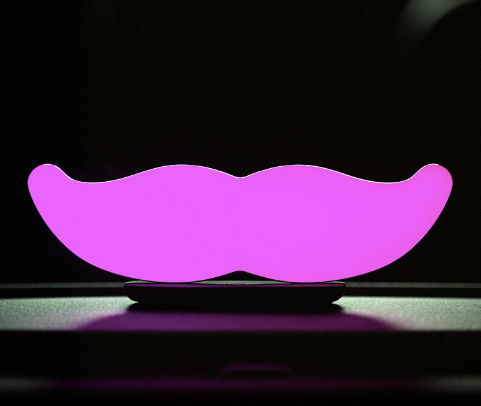
Soon people began associating the pink mustaches with the Lyft brand. For a while the company incorporated it into their logo. They shifted from the car-front ornament to a “glowstache” which lit up inside the car to identify it as a Lyft ride. Ultimately the light stayed but the mustache went.
Lyft has engaged in funky, light-hearted and non-traditional marketing. Lyft’s first ad was animated. More recently Lyft has sponsored branded entertainment like Kevin Hart: Lyft Legend and Undercover Lyft where celebrities like Demi Lovato and David Ortiz drive unsuspecting Lyft riders incognito.
As one of the few people left in the U.S. with neither app on my phone, I sought insight as to whether the brand of rideshare matters to patrons.
I polled friends and connections on Facebook and Twitter and via email about their preference between Uber and Lyft. My highly unscientific study garnered a sum of 14 votes – 11 for Lyft, two for Uber and one who said “same to me.”
Three people preferred Lyft because it was cheaper. One said the brand was more socially and environmentally conscious, and another heard it treated drivers better. Two people cited Uber’s bad management as a reason for their vote for Lyft and another shared an awful experience with Uber.
Yet one who preferred Lyft added a caveat saying that when Lyft isn’t available, she uses Uber as it is more widespread.
These responses got me thinking about what is really driving the ridesharing industry: availability and price.
I’m not saying that people don’t factor their brand impressions into their decisions. But in the effort to get from one place to another, availability and price seem to reign in the moment for many people as they have both apps and can tell you the price differential between the two services.
When both are available and price becomes the determining factor, brand doesn’t matter. These riders are treating on-demand transportation as a commodity.
Brands involved in commodity price wars have a tough time making a profit.
Neither Uber nor Lyft has ever made a profit and it is unclear if they ever will. Lyft reported a loss of $911 million in 2018. Uber posted $997 million in profit, but that included the sale of some assets. Subtract the sales and Uber lost $1.8 billion.
Moreover, the ridesharing industry is young and has low barriers to entry.
On-demand transportation requires little more than the creation of an app and the building of driver and rider communities. Lyft and Uber are spending lavishly to be at the top of the markets they compete in, but new entrants keep coming.
New York City has Via and Juno. Boston has Safr. Upstart Bolt is now besting Uber in Kenya and Poland, and is about to enter London.
And then there is Waze, the Google-owned app that has launched a carpooling service aimed at helping people get to and from work. Riders in the U.S. are charged 58 cents per mile, the IRS reimbursement rate.
The price competition will likely get worse before it abates.
The Economics major in me expects that time and investor impatience will force some of the weaker players to sell to bigger ones or to die off and the industry will consolidate. As the two largest players in the U.S. market, I expect both Uber and Lyft will be consolidators.
Who will win?
Lyft has better defined its brand, is working harder to build community than Uber and is focused on growing their presence in North America. Uber is a brand in adolescence with an identity crisis as it is spread across too many endeavors and geographies.
My money would be on Lyft as the top player in the U.S. if I was in the habit in placing money on brands that have no idea if they will ever be profitable.
What does Uber and Lyft’s fierce competition have to do with your brand? It offers an object lesson on the dangers of competing on price.
There is a difference between being competitive – having a price in the ballpark – and competing on price which means using it as your main competitive lever.
When you compete on price, the only place to go is down. Instead of working your price down, build your brand value up.
The moral of the story is avoid centering your business on a commodity.
It is possible that Dan may think the moral of the story is that we should have thought to create a ride-hailing app after our experience in Paris!
Which ridesharing app do you use? And how do you choose?
I have called SiriusXM twice in the past seven months to cancel my subscription and yet I am still subscribed.
Here’s why.
When I bought my Subaru Forester in April 2017 I got a free three-month subscription to SiriusXM radio. After three months SiriusXM offered me six months for $30 ($34.10 with U.S. Music Royalty fee) and I accepted.
Last March SiriusXM sent me a bill for the next six months at $114.26 ($95.94 subscription + $18.32 U.S. Music Royalty fee). That’s $19.04 per month and way more that I would ever pay to listen to music in my car.
I called to cancel.
Upon hearing my objection the customer service representative offered me the same deal I had before - $30 plus music royalty fee for six months - which I accepted.
On the Friday before Labor Day I realized that my subscription was going to expire in three days so I called SiriusXM.
The automated operator answered. I hit zero at the first opportunity after the initial screening questions to queue up to talk to a human.
After five minutes Josie picked up my call. I told her I wanted to cancel. When she asked why, I told her I did not want to pay $19 per month for music.
Josie reviewed my account with me and then told me she could not offer me a promotion but a different department could. She transferred my call and Francisco picked up.
At that point I was on the phone eight minutes and wondering if SiriusXM was worth the trouble.
Francisco offered me five months for $35. My thought was “Ugh then I have to call back again in five months?” I asked if he had anything longer.
His next offer was six months for $33. Though the offer was better I felt annoyed that he did not offer this one first. I asked if he had anything longer than six months because these semi-annual phone calls were not a good use of my time.
His third promotional offer was $5.99 per month for one year (plus fees and taxes of course) but the company required a credit card number and permission to bill automatically each month.
After all these dodges and shifts, SiriusXM wants authorization to access to my credit card on a monthly basis? No way!
This, ladies and gentlemen and people of all persuasions, is not customer service.
This is a game.
You’ve heard that the squeaky wheel gets the grease? It also gets the discount.
Wheels that don’t pick up the phone get fleeced.
As a human and perhaps as a customer of SiriusXM you can see my frustration with this brand.
Maybe SiriusXM’s management thinks that most customers will pay full price without complaining and that those who call will consider the steep discounts won from their promotions time well spent.
They would be wrong.
Because I, SiriusXM customer, was not thinking “Oh what a great deal. That was totally worth my time.”
My brand associations with SiriusXM are overpriced, frustrating, hassle and disrespect for my time. They have nothing to do with great deals, music or programming.
Moreover, SiriusXM has eroded my trust. They have a zillion deals and you never know if you are getting the best one. Given their tendency to keep billing as they raise their prices, I wouldn’t trust them with access to my credit card.
These are not associations that bode well for my future as a SiriusXM customer. Lost customer is more likely.
When you price your products and services of course you have to cover your costs and earn a profit. Most brands also have to consider their competitive set when pricing as well.
For any brand to thrive in the long run though, you have to deliver value to your customers.
Price is not the only measure of value.
Brand value barometers include:
If you deliver on these measures of value and price your offering appropriately, any price resentment customers may feel upon purchase will likely fade in memory. Impressive performance on those elements builds your brand value and goodwill in the mind of your customer.
On the other hand, if your pricing is out of sync with customers’ value perceptions your brand may already be on precarious ground.
Add time-consuming, hassle-laden semi-annual negotiations and your brand is now teetering on the precipice, ready to tip over into customer disengagement.
Brands betting on customer indifference and making attentive customers jump through hoops risk creating legions of disgruntled customers. And disgruntled customers share their negative experiences, like I am doing now with you, my wonderful reader.
I’ll never get back the 17 minutes and 22 seconds I spent on the phone with SiriusXM, only to end up paying 64 cents more per month than I did for the last six months.
Any manager who would claim I saved $74.96 from the full price would be dreaming. I would never have paid $114.26 to begin with.
Brands need to appreciate their customers’ business, not play roulette with them only when they threaten to leave.
Think about how you want your customers to feel as they interact with your brand and build every aspect of your business around that.
My last piece of advice?
If you are a SiriusXM customer, don’t pay full price!
For those of you left wondering, I took the six months for $33. I’m not sure if I will still be a SiriusXM customer after that.
What I am sure of is that SiriusXM isn’t the only one playing the subscription discount game. We have wrangled regular discounts from Comcast and The Wall Street Journal as well.
If you have a SiriusXM subscription (car radio and/or internet) that you want to keep and have been paying full price, here’s how to reduce your cost: