Two days before my daughter Fiona’s bat mitzvah in June 2013, my mother-in-law’s cousin Beth dropped off a beautifully-wrapped, 3 ½-inch square box.
Inside were two Alex and Ani bracelets. One charm had a script initial F, the other had a Jewish star.
I had never heard of Alex and Ani. But Fiona’s face lit up. Her excitement told me our 70-something cousin had nailed the gift.
Like anything you suddenly become aware of, I started to see Alex and Ani bracelets everywhere.
Friends of Fiona and other teenage girls had clusters of them piled on their wrists.
Alex and Ani opened a store near us in Wellesley, Massachusetts, an upscale Boston suburb. Fiona and I accompanied my son AJ when he went there to get a sweet 16 gift for a friend.
The store was an experience. Enthusiastic salespeople, all late-teen or 20-something women, greeted us warmly, asked our purpose, and offered help.
They wanted to know if the gift recipient believed in the transformative power of jewelry.
Display cases ran the perimeter of the small, rectangular shop, and contained bracelets with charms for every possible identity marker a woman could imagine: daughter, mom, grandmother, best friend, every initial in the alphabet, Red Sox fan, Yankee fan, insert-your-sports-team-here fan.
Other charms were emblems, like the tree of life and the Claddagh, which symbolizes love, loyalty, and friendship. Bracelets cost $30-$40 each.
The store’s aura, enthusiastic salespeople, meaningful charms, and affordable prices explained why these simple bangles were so popular among teenage girls.
Wellesley seemed to be a good market for them. I was surprised when the shop closed less than three years later.
Carolyn Rafaelian was granted a patent on “an expandable wire bangle bracelet” on March 23, 2004. The simple design put the focus on the charm that adorned it.
Having recently taken over Cinerama, Inc., her father’s costume jewelry factory in Cranston, Rhode Island, Rafaelian started a company to market her bracelets. She named it after her two eldest daughters, Alex and Ani.
Rafaelian understood that women chose jewelry to reflect their persona, to express who they are and who they aspire to be.
For this reason, she sought to infuse her charms with “positive energy” and studied symbols and runes.
The messages of well-being, empowerment, and uplift made Rafaelian’s creations irresistible to customers and flavored the brand’s early culture.

Photo by Marcus Bellamy on Unsplash
Rafaelian also proved a savvy and creative marketer.
In 2004, she sent Gwyneth Paltrow a bangle with an apple charm to congratulate her on the birth of her daughter, Apple. Images of Paltrow wearing the bangle gave Alex and Ani an immediate boost.
Alex and Ani gained other celebrity fans like Anne Hathaway, Miley Cyrus, and Sandra Bullock.
Sales grew from $654,000 in 2006 to $2.2 million in 2009, the year Alex and Ani opened their first store, in Newport, Rhode Island.
As a leader, Rafaelian leaned into spirituality, using astrology, Biblical Numerology and New Age practices like tarot card readings to make business decisions.
After meeting Giovanni Feroce at a University of Rhode Island alumni homecoming event in October 2009, Rafaelian hired him as CEO in April 2010. She took the role of Chief Creative Officer.
Feroce was a former elite Army officer. He insisted on complete operational control.
Feroce struck deals with Saks Fifth Avenue and other department stores. He inked licensing agreements with Walt Disney, the National Football League, and the Marines.
Alex and Ani enjoyed distribution through hundreds of mom-and-pop jewelry stores, and opened nearly 40 branded stores like the one in Wellesley.
Sales soared from $4.5 million in 2010 to $230 million in 2013. The employee count reached 1,084 by the end of 2013.
In 2012, JH Partners, a San Francisco private-equity firm, purchased a 40 percent holding in Alex and Ani for $50 million.
On March 13, 2014, Feroce suddenly left the company.
Feroce told The Providence Journal his departure came over a difference with Rafaelian over how fast the brand should grow.
Feroce envisioned making Alex and Ani a lifestyle brand – think apparel, home goods, perfume, accessories, like Ralph Lauren or Michael Kors. He wanted to hire a team of designers to speed development.
A former executive said Rafaelian pushed him out, along with anyone loyal to him.
The exodus drained management and included the chief financial officer, chief technical officer, chief strategy officer, chief digital officer, acting chief operating officer, assistant general counsel and VPs of retail, wholesale, and transitional operations.
Though Rafaelian declined to comment, she had told The Providence Journal in July 2012 “The company’s an extension of me.”
My guess is Feroce’s desire to bring in a design team for other lifestyle product lines threatened Rafaelian’s view of the brand as an extension of herself. She could not give up control.
Rafaelian retook the reins as CEO, and never let go.
She continued her New Age and spiritual practices, burning sage to purge areas of bad energy and having shamans bless product inventory.
Sales reached $350 million in 2014.
In December 2014, JH Partners sold their 40-percent stake to British buyout firm Lion Capital LLP for $400 million.
That transaction effectively valued Alex and Ani at $1 billion.
With Lion Capital’s investment, talk of an initial public offering began. Professional management sought to reduce costs.
I’m betting the Wellesley store’s high rent was a casualty of the cost cutting and the reason it closed in early 2016.
Alex and Ani took a $170 million loan from Bank of America (BOA) in 2016 to buy Cinerama, Inc. from Rafaelian and her sister. Acquiring the factory was seen as vertical integration move.
Rafaelian hired presidents, but undermined them. Harlan Kent, former CEO of Yankee Candle, lasted less than a year.
His successor, Cindy DiPietrantonio, left after two years in December 2017.
From the outside, Alex and Ani seemed to chime along, finishing 2017 with $550 million in sales. Rafaelian graced the cover of Forbes magazine as the poster girl for women billionaires.
Inside, however, turmoil reigned.
The brand lost much institutional knowledge with the top management exodus and struggled to maintain retail relationships. Alex and Ani closed stores, endured rounds of layoffs, and cut digital marketing and event budgets.
Employees who had loved working there now feared for their jobs.
Rafaelian hired a new CFO and tried to run the brand herself. She told a Forbes reporter, “I don’t listen, which is the best thing I do.”
The brand’s belt-tightening included a new direct-to-consumer strategy in 2018, aiming to have 75-80% of sales go through the company website or company stores within 18 months.
Mom-and-pop jewelry stores that helped build the brand were cut off. Retailers felt abandoned.
Sales dipped to $500 million for 2018. Interest in the bangles was waning. Earnings (EBITDA) plummeted to less than $10 million.
When BOA saw the earnings, they held the company in default of their loan and moved to liquidate it.
Lion Capital struck an agreement with BOA to prevent liquidation, which stipulated Rafaelian had to give up her controlling interest in the company.
Lion Capital brought in a new CEO, Bob Trabucco, but the ship was sinking fast. Sales were down 40% in the fourth quarter of 2019 compared to 2018 and continued to tank.
Pandemic-induced store closings exacerbated the situation. Alex and Ani terminated Rafaelian’s employment in 2020 and filed for bankruptcy in 2021.
While some companies manage to rebuild during bankruptcy, Alex and Ani is swirling down the drain.
At the beginning of 2023, the company had 38 stores in the US. In June 2023, they closed 21 stores and their corporate headquarters overnight, leaving them with only 7 stores and no presence in their home state of Rhode Island.
Employees and store managers were shocked.
Equipment and furnishings left behind were auctioned off in November 2023.
Multiple creditors claimed unpaid bills.
Among them, Alex and Ani owed the town of East Greenwich, RI over $251,000 in back taxes, their corporate-office landlord nearly $458,000 in rent, and a local videographer $1,500 for video production.
It’s ironic and sad that Alex and Ani’s website recently launched a line of pearl products called “Stranded by Alex and Ani.” That’s how their employees and creditors felt.

How did a brand worth a billion sink to beans?
First, Alex and Ani’s founder could not step back when her leadership was no longer relevant.
In my book Teenage Wastebrand: How Your Brand Can Stop Struggling and Start Scaling, the diciest brand adolescent symptom I discovered was asserting independence.
Brands assert independence when they outgrow their founder’s skillset. The symptom is dicey because founders often fail to realize the situation or choose to ignore it.
Rafaelian ignored it.
Rafaelian’s insights on jewelry and spiritual leadership gave Alex and Ani a great start, but the brand needed professional leadership to grow. Rafaelian saw that and hired Feroce. He and his team grew the brand exponentially.
But she pushed him and the presidents who succeeded him out.
When Rafaelian tried to preside, the brand declined. Waning consumer interest and pandemic store closures turned the decline into a freefall.
Second, the founder’s hubris and conflicts of interest drained the company.
Rafaelian’s swift retribution against Feroce’s management team deprived the brand of relationships and institutional know-how. The company went from well-oiled machine to scrambling.
Rafaelian prioritized her control over the brand’s health.
True to her word, she didn’t listen to the presidents she hired and undermined them, depriving the company of professional leadership.
The loan to purchase the factory she owned burdened the company financially and put it at risk. Yet she entered the loan, which she stood to benefit from.
When BOA ruled the loan in default, it nearly killed the company. Rafaelian risked the company’s viability to fill her personal coffers.
Third, management chaos and investor-prompted cost-cutting alienated Alex and Ani’s constituents and commoditized the brand.
Waves of layoffs strained the company’s ability to operate, stranded thousands of employees, and demoralized those who remained.
Alex and Ani’s partners struggled to communicate with the company as their contacts were suddenly gone. When the brand became unreliable, they cut ties.
Mom-and-pop stores that provided the kind of personal selling that promoted Alex and Ani’s aura were cut off in favor of direct selling. As company stores closed, the brand lost many of its strongest advocates.
Alex and Ani’s website could not present the brand the way an informed salesperson could. The brand lost its meaning and differentiation.
Fourth, the brand failed to diversify.
The Alex and Ani brand stood for empowerment, wellness, and uplift. Feroce was right to look to expand beyond jewelry. When interest in the bangles waned, customers had nothing else to keep them engaged with the brand.
Alex and Ani succumbed to brand adolescence and is unlikely to recover.
If you are the founder, your brand’s survival depends on your ability to lead or find someone who can.
Reid Hoffman (LinkedIn) and Clay Collins (LeadPages) shared their thinking when they decided to step down as CEO. You can see their thoughts and find questions to help you assess your CEO fitness here.
JH Partners were the big money winners. They turned $50 million to $400 million in two years and got out while things were good.
Carolyn Rafaelian had her net worth plummet from $1 Billion to $100 million and had to sell some of her properties. She started two other jewelry companies.
As for Fiona, she has not worn her Alex and Ani bracelets in years. She said they became annoying because they clanked loudly and banged against the desk when she wrote.
It speaks volumes that she left her collection at home, thousands of miles from where she is in grad school.
Did you know anyone with an Alex and Ani bracelet or own one yourself?
***
Saalt’s humor introduces teen girls, women and yes, even dad, to their period cup. (4 minutes, 34 seconds)
SNL mocks the charm-as-identity-marker gift giving. (1 minute, 34 seconds)
What Vincent Van Gogh and Frida Kahlo might endure if they had to cater to corporate interests (2 minutes, 44 seconds, h/t Rohit Bhargava)
Some brides get superstitious before their wedding. Luckily that’s not me.
Dan and I got married in June 1994. On the Friday that kicked off our wedding weekend, the US began hosting World Cup Soccer for the first time.
At the opening ceremonies in Chicago, host Oprah Winfrey fell off the stage. Diana Ross pulled a penalty kick left, but the goal posts had been rigged for drama and split open anyway.
Those weren’t even the weirdest events that day.
They were eclipsed that evening by OJ Simpson as he led the LA police on a low-speed highway chase in a white Ford Bronco. Thirty-five miles per hour and yet the chase went on for 60 miles.
Despite these oddities, our wedding went smoothly that Sunday. On Monday we left for a two-week honeymoon in Greece.
And when we returned, Federal Express as we knew it was gone.
Every company truck, plane, package, and envelope from the former Federal Express now said FedEx.
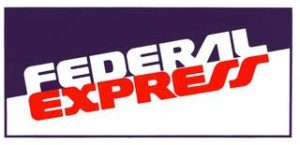
It was weird, but easy to understand. The verb “to fedex” had been in our business lexicon for a few years by then.
What a quick transformation the company pulled off. They timed it to happen overnight on June 24, 1994.
You can imagine the amount of money, time, and effort they spent to orchestrate that.
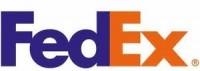
Why would they do that though? The company was growing and business was good.
When Fred Smith launched Federal Express in 1973, nationwide overnight delivery seemed like a pipedream. The concept was so farfetched that Xerox shipped empty boxes for two weeks before entrusting them with document-filled ones.
The initial job of the Federal Express brand was to represent speed and reliability. Hence the tagline “When it absolutely, positively has to be there overnight.”
Creative approaches to emphasizing their speed resulted in entertaining commercials starring fast talker John Moschitta.
People frustrated with the United States Postal Service (USPS) – the only other option at the time – began to give them a try.
By the early 1990s, with their reliability and speed established, Federal Express was going global.
Meanwhile, competitor Emery had copied Federal Express’ model by getting their own planes.
Airborne Express entered the small package air express business.
The USPS began pushing their own overnight delivery service.
United Parcel Service (UPS), the largest shipper via trucks, entered the air shipping business. DHL Worldwide Courier Express Network replicated Federal Express’ US model overseas.
Though business was still growing, Federal Express found itself as a brand in adolescence with lots of competition.
American high schools offer teenagers the opportunity to compete in sports by fielding their best athletes on a team they designate as Varsity.
High schools often combine students from several different areas of a city or town. Many students who played a sport in elementary and middle school find themselves vying for the few spots on the high school varsity team.
Brands in adolescence can face similar competition.
When Federal Express began, they were the only overnight option. As their success grew, competitors flooded in.
Like teenagers trying to impress a coach for a spot on the varsity team, Federal Express now tried to stand out in a crowded field for their customers’ consideration.
I call this brand adolescence symptom defending your varsity team spot.
Federal Express’s overnight transformation to FedEx turned out to be the culmination of two years of research and rebranding work.
Both the name change and the logistics feat reminded customers and the public that they personified speed and reliability.
But FedEx did not stop there.
In their research, FedEx no doubt heard that even with their brand promise, customers were anxious about packages arriving on time while they were in transit.
FedEx looked for ways to deepen their relationship with customers by allaying their anxiety.
They built a proprietary tracking system so customers could not only have faith that the brand would deliver on time, they could get proof of where their package was in the process.
Their tracking option proved highly desirable among customers and differentiated them from rivals.
FedEx also created the first automated package shipping system for PCs and, in the mid-1990s, was one of the first companies to enable business-to-business transactions on its website.
Noting their customers’ international business dealings, FedEx expanded overseas, becoming authorized to serve China in 1995. Through an acquisition from Evergreen International Airlines, they became the sole US cargo-only carrier with aviation rights to China.
In February 2004, FedEx bought privately-held Kinko’s (a document-copying and business-services store chain) and branded them FedEx Kinko’s (and, in 2008, FedEx Office), giving the brand 1,200 outposts to expand their reach to customers and make it more convenient.
FedEx maintains their lead in the overnight shipping industry by constantly looking for ways to enhance their customers’ experience.
How do know if you need to defend your brand’s varsity team spot?
Here are some telltale signs:
1. Your marketplace has become crowded.
If your brand launched into a “white space” – a gap in the marketplace where customers’ needs were not met – your success may have attracted many competitors.
While Federal Express founded the overnight delivery industry, they had plenty of competitors offering the same service twenty years later.
2. Your purpose no longer differentiates your company.
Overnight delivery was a unique – and outlandish – purpose initially. By 1994, it no longer distinguished Federal Express from its competitors.
FedEx broadened its purpose to include logistics to set themselves apart, and announced that by flipping the switch on their rebrand.
Spotify initially focused on allowing listeners to stream music legally. Once that space became crowded, Spotify CEO Daniel Ek revised their purpose to focus on supporting creativity and acknowledge both their user and artist audiences.
3. Your brand attributes have become category attributes.
Speed, reliability, and overnight set Federal Express apart in its early years. Now all players in the industry must have those to compete.
FedEx’s rebrand and continued evolution have added logistical expertise, peace of mind, and convenience to distinguish them from the pack.
If your brand’s dominance in your niche has eroded, you’ll need some strategic work to reassert your market leadership.
Clarify your brand identity and evolve if needed. Has your purpose become commonplace, like Federal Express’s overnight pledge had?
Have your brand attributes become category attributes like speed and reliability did for Federal Express, no longer differentiating them?
Conduct research among your audiences (customers, partners, employees) to rediscover why they come to you and what current needs remain unmet.
See where you can serve them in new and unique ways. Revise or update your purpose and attributes if needed.
Deepen your brand’s relationship with your audience by doubling down on your niche. Through research and conversations with your audience, continue to build your knowledge about them and seek to understand them more than your competitors.
Use your knowledge to serve your customers better than your competitors. FedEx discovered their customers were still anxious about their packages in transit, which led to their tracking system creation.
Address not only the functional needs of your audience but the emotional ones too. The peace of mind FedEx’s customers felt when they were able to see exactly where their package was catapulted the company back to the go-to shipping choice.
For more on how to defend your brand’s varsity team spot, check out Teenage Wastebrand: How Your Brand Can Stop Struggling and Start Scaling (Chapter 8).
By initiating the overnight shipping industry, Federal Express had the market to themselves for a while. But success attracts competitors, and the honeymoon ended.
It is worth noting FedEx’s 1994 rebrand was not just cosmetic but reflected real strategic changes in the company. Companies that just change their logo and don’t revitalize their brands don’t boost business.
FedEx has worked hard to maintain their market leadership and capitalize on their OG shipping stature. (OG is original gangster, for those old enough to have used FedEx in their early years.)
These days Amazon is among their toughest competition. Once the new-niche honeymoon ends, it rarely comes back.
Happily, my honeymoon continues…going on 28 years this June!
***
The wedding industry is booming now, as many who postponed their wedding early in the pandemic are getting married this year. Resources for the big day can be hard to find.
If you have a need to officiate a wedding for a friend or family member, Miller Lite and the Universal Life Church would like to help. See how to get ordained here.
Hat tip to Rohit Bhargava for noting this in his Non-Obvious Insights Newsletter.
Likewise, many people who postponed vacations have trips planned now.
Check out this SNL insightful commercial about what vacations can and cannot do for you.
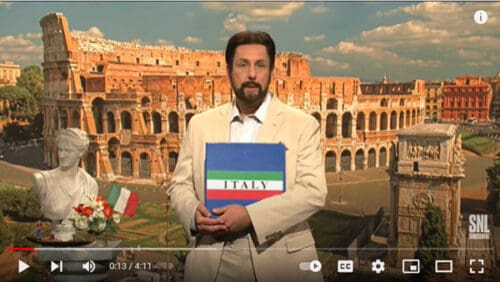
Thanks to Austin Kleon for tweeting about this.
After spending the winter of 2021 producing my book and the early spring getting it into the world, I needed a fun break.
Don’t we all?
Instead, I decided tackle one of the biggest brand dilemmas of the year.
Who should host the quiz show Jeopardy!?
If you haven’t been watching or somehow haven’t heard, Alex Trebek, host of the show in daily syndication for 37 years, passed away on November 8, 2020 at age 80 after a battle with pancreatic cancer.
His passing added to the upheaval we’ve experienced since March 2020 for many Jeopardy! fans.
His last show aired on January 8, 2021.
Since January 11, 2021, the show has been running a sequence of guest hosts.
Replacements have included broadcast journalists Katie Couric and Anderson Cooper, Mike Richards (the show’s executive producer), Aaron Rodgers (Green Bay Packers’ quarterback), and Ken Jennings (winningest contestant in Jeopardy history).
The parade-o’-guest-hosts has been amusing and is scheduled to continue through at least mid-August 2021.
Just as life will never be quite the same post-pandemic, Jeopardy! will never be the same without Alex Trebek.
To move forward we must all find our “next normal.”
Jeopardy! fans’ next normal includes a new, regular, well-chosen host.
Both the parade of guest hosts and uncertainty surrounding the future permanent host suggest to me that the Jeopardy! brand was unprepared to lose Alex and is feeling somewhat lost now.
Let’s help them out, shall we?
The Jeopardy! brand was born in 1963 on a plane during a conversation between entertainment mogul Merv Griffin and his wife Julann about the quiz show scandals of the 1950s.
Merv wanted to create a new quiz show but feared the scandals showing the outcomes had been fixed had tainted the format’s credibility.
Julann jokingly suggested Merv give the contestants the answers.
After Julann tossed Merv “5280 feet” (“How many feet in a mile?”) and “79 Wistful Vista” (“Was that Fibber McGee and Molly’s address?”), he jumped on the idea.
I had no idea who Fibber McGee and Molly were before my research.
Art Fleming hosted the NBC and weekly syndication versions of Jeopardy! from 1964 to 1975 and from 1978 to 1979.
By the time the show was revived in 1984, the brand was 20 years old.
You could argue the brand was in adolescence then, attempting to regain its footing by shifting from weekly syndication to daily, instituting a digitized game board, and replacing Art Fleming with Alex Trebek.
The story of how Alex Trebek got the hosting job is less brand redirection and more opportunistic moment.
One night while Chuck Woolery was hosting Wheel of Fortune, he was hospitalized and Trebek filled in last minute. Wheel of Fortune was also a Merv Griffin creation. Griffin liked Trebek’s seamless performance and offered him Jeopardy!
A Sports Illustrated article from 1989 stated there were Jeopardy! purists who still regarded Fleming as “the authentic Mr. Know-It-All,” and that he was accosted frequently to answer fans’ trivia questions and settle answer disputes.
Clearly Sports Illustrated considered its purview akin to the corresponding Trivial Pursuit category at the time, “Sports and Leisure.” How much athleticism is there to ringing that buzzer?
Alex Trebek will always be the original host for those of us who started watching when the show was revived in 1984.
Art Fleming described Jeopardy! as “one big party game” and “an entertaining way to fill up 30 minutes, but basically fluff.”
In his 37 years of hosting, Alex Trebek became the face of Jeopardy! and put his own take on the brand.
On the Jeopardy! website, he is quoted as saying “I think what makes Jeopardy! special is that, among all the quiz and game shows out there, ours tends to reward and encourage learning.”

The dozens of Jeopardy! templates offered to teachers on the internet support that notion. Teachers use the game to engage students and help them self-assess their mastery of a subject.
Jeopardy! won a 2011 Peabody Award, the first bestowed on a television quiz show in more than 50 years. Given in 2012, the citation said the award was “for decades of consistently encouraging, celebrating and rewarding knowledge.” It called the program “a model of integrity and decorum.”
Successful brands don’t happen by accident. They succeed by design.
This design includes three key elements which serve as guiding forces for the brand.
The first two elements – the purpose and the personality – constitute the brand’s identity.
Based on the hosts’ comments, the Peabody award citation, and my own experience watching the show for decades, I’d describe the Jeopardy! brand purpose as to entertain and educate by testing knowledge of trivia.
Jeopardy!’s brand attributes strike me as fun, educational, intellectual, and knowledgeable.
Jeopardy!’s values, which guide the behavior of the brand team including the writers who craft the questions, include integrity, decorum, research-based facts, verification, accuracy, and fairness.
Together Jeopardy!’s purpose, attributes, and values provide a context for everything the brand does, including selecting a new host.
The new Jeopardy! host needs to embody the brand.
It’s a tall order to be fun, entertaining, intellectual, knowledgeable, and well-behaved. Even taller to be a model of integrity.
Not every guest host has filled the order.
Amanda Hess noted in her article in The New York Times that guest hosts have fallen into four categories: Jeopardy! champions, celebrity doctors, news anchors, and jocks.
The division of labor is not even among the categories.
According to the posted schedule, eight news anchors/journalists will get a chance to host. They occupy half of the hosting spots.
The other half includes two champions (Ken Jennings and Buzzy Cohen), two celebrity doctors (Mehmet Oz and Mayim Bialik), two jocks (Aaron Rodgers and Joe Buck), plus executive producer Mike Richards who has hosted other shows, and actor LeVar Burton.
I understand the bias toward news anchors for their integrity, intellectual poise, and knowledge. The fun factor among them? A yawn so far.
Dr. Mehmet Oz’s participation prompted a group of former contests to write a letter in protest, as the doctor’s personal brand attribute of pseudoscience clashed with “a show that values facts and knowledge.”
Dr. Oz’s hyping of hydroxychloroquine as a COVID-19 remedy on FOX news was among the more recent in his history of questionable pronouncements.
Amanda Hess advocated for Ken Jennings or Aaron Rodgers among the hosts that have appeared so far.
Jennings was pleasant.
Aaron Rodgers started out a bit stiff but then seemed to relax and enjoy the show, especially in this personal moment.
No one has stood out yet as the aha! moment choice.
There is great anticipation for the last week in July. LeVar Burton will host.
Burton is an actor, producer, educator, and author whose credits include playing Kunta Kinte in Roots, host and producer of PBS’s Reading Rainbow for 23 years, and playing Lieutenant Junior Grade Geordi La Forge in the television series Star Trek: The Next Generation as well as in movies based on that series.
Burton was not on the initial schedule, but producers may have been compelled to include him after Joshua Sanders started a petition for him to host.
As of this writing, the petition 254,078 signatures.
Why have more than a quarter of a million people signed this petition?
Burton’s unbridled enthusiasm for reading, learning, and truthful storytelling has shone through in every role, podcast, video, and book he has created.
In other words, he checks every box in the Jeopardy! brand.


The host the Jeopardy! producers choose will determine how the show fares going forward. With such a large franchise, it is understandable the decision would seem risky.
While it is unlikely the producers will please everyone, by using the brand’s clearly defined guidelines they have a good shot at pleasing most of their audience and setting the brand up for a bright future.
I hope you can see by Jeopardy!’s example that brands aren’t just nice-to-haves for marketing. They underlie everything your organization does and how it serves your audience.
Brands provide a foundation you can rely on when facing major decisions like replacing a beloved front man after 37 years.
Have you determined your brand’s purpose, attributes, and values and shared them with your organization?
And who would you like to see as the new regular host of Jeopardy!?
P.S. If you haven’t defined your brand’s purpose, attributes, or values yet, you can find detailed step-by-step guides in my book Teenage Wastebrand: How You Can Stop Struggling and Start Scaling. Or you can call me for help.
P.P.S. LeVar Burton has my vote!
Liz Solar is a voice talent who has been heard in everything from TV commercials to documentary and audiobook narration to animation. I was honored to be a guest on her Embark podcast recently.
We had a fun and wide-ranging conversation about how:
You can listen here.

On February 28, 1984, about seven months before Jeopardy!’s Alex Trebek era began, Weird Al Yankovic released his second album of parody songs including “I Lost on Jeopardy.” The song is hilarious. For the full experience, pause the video to read each of the clues.

You can listen to the song that inspired Weird Al’s parody, “Jeopardy” by Greg Kihn, who makes a cameo in Al Yankovich’s video.
Inspired to try out for the show? Go here to take the Jeopardy! anytime test.
Or peruse the final jeopardy questions for the last 30 years here.
A new client requested a Skype call recently.
I installed Skype on my new laptop and wanted to test drive a call with my son AJ.
When I asked him, AJ said he did not think he had it installed on his four-year-old laptop.
Then he asked if my new client was 80 years old.
The implication was clear: Skype was out. No one was really using it anymore.
With a gleam in his eye, AJ then said: “Hey, you should write about Skype.”
This is what happens when your children grow up watching you write a monthly marketing newsletter.
And so here we are.
AJ had a point.
Skype use for internet phone and video calls was so prevalent in June 2014, the Oxford English Dictionary added the verb to Skype, acknowledging its standard-bearer status akin to brands like Google, Band Aid, and Xerox.
How did they fall so far so fast?
In August 2003, Niklas Zennström and Janus Friis launched Skype along with a team of Estonian engineers. The team designed Skype as a peer-to-peer calling system, which translated voice to data and transmitted it over the internet. This same team had used similar code to launch Kazaa, a music file sharing system, a few years earlier.
Their idea was to “democratize global communication” by making voice calls cheap.
Two Skype users could converse for free via their computers. For a low cost, Skype users could call a mobile or landline phone anywhere in the world.
Skype use soared. In February 2004 the company added audio conference calling. By October 2004 Skype managed 100,000 concurrent users. One year later, the concurrent user count had jumped to one million.
Skype’s utility attracted a suitor. eBay bought the company in September 2005 for $2.6 billion. eBay’s vision was that Skype technology would facilitate communication between its buyers and sellers.
But eBay buyers and sellers preferred to communicate via email due to its anonymity.
eBay’s conservative bank-like culture also proved a bad fit for Skype’s youthful startup culture. Skype went through several management teams in four years.
Yet Skype kept growing. In January 2006 the brand added video conferencing. In April 2006 the number of registered users reached 100 million. The number jumped to 530 million by 2009 and to 663 million in September 2011.
I was one of those millions in 2007.
I had a tea and herbal supplement client based in Switzerland with a U.S. management team in Eastern Massachusetts. The client team members, their PR agency and I tried to video conference via Skype several times during my six-month engagement.
Sometimes it worked. Often it didn’t.
Due to the culture clash and the community preference for email, eBay sold a 65 percent stake in Skype to an investor group in September 2009 for $1.9 billion.
Microsoft paid $8.5 billion for Skype in May 2011, giving the investors a hefty return.
While Microsoft was purchasing Skype, Eric Yuan was founding Zoom.
Yuan had spent 13 years in Cisco-Webex’s engineering group. His last year he lobbied Cisco management to let him rebuild the Webex video conference offering to improve it. Cisco declined.
Yuan left and mobilized 40 engineers to realize his own cloud-based video conference service. Yuan’s vision for Zoom was to build a robust technological foundation so the service could “make communications frictionless.”
Zoom launched in January 2013 with an initial conference maximum of 25 participants.
Within a month, Zoom had 400,000 users. By the end of May 2013, that number had grown to one million. Strong growth, but still .17 percent of the 600-plus million that Skype had.
Like humans, brands succeed when they know who they are and how they want to be perceived.
The “who they are” is the brand’s purpose. The brand’s attributes define “how they want to be perceived,” a.k.a. the brand’s personality.
Together they constitute your brand’s identity.
Brands in adolescence often flounder because they have not taken the time to establish their identity, and thus have no guidelines for growth or design.
By 2011, the peer-to-peer technology Skype was built on was showing its limits.
Users experienced long load times, browser windows filled with ads, browser and app crashes, and unpredictable updates that derailed users’ meetings.
Peer-to-peer technology also did not play well on mobile phones.
Skype was a brand in adolescence with an identity crisis.
While Skype’s initial purpose was to “democratize global communication” by making calls cheap, it was far from the only company doing that now. In addition to Cisco-Webex and Zoom, Apple Facetime, BlueJeans Network and the newly launched Google Hangouts were among users’ choices.
Skype’s purpose had ceased to differentiate it from competitors.
The brand needed to craft a new purpose like Spotify did when their original one no longer differentiated them. But that did not happen.
Instead management focused on a core strategy of making its services as broadly available as possible.
Nor did Skype put forth a deliberate brand personality.
In the void, users associated it with adjectives describing their experience: wonky, unreliable, slow, buggy, infuriating.
Having three owners in six years did not help. Each owner looked to profit from Skype but not to invest in the brand’s future.
eBay wanted it for buyer-seller communication. The investor group wanted to turn a quick profit. Microsoft wanted Skype’s cool factor.
Microsoft began transferring Skype from its peer-to-peer technology to a cloud-based application in 2013, but took years to complete the process, frustrating and alienating users.
Skype’s domination in the international call market - which had grown to 40% in 2014 – masked the urgency of strategically addressing the brand.
In addition to its identity crisis, Skype was oversleeping as well, ceding ground to competitors.
Yuan’s “make communications frictionless” purpose for Zoom had led the brand team to invest two years in developing the technological foundation before the service launched and kept them focused as it grew.
Zoom gained a reputation for being easy to use, easy to access and reliable. You did not need an account to use it. You could do a 40-minute call for free. Non-tech users appreciated the single-click access.
Zoom had unique features that further endeared users to the brand:

Photo by visuals on Unsplash
While Skype’s management was focused on growth, Yuan led the Zoom team to focus on user experience.
Yuan’s focus on making current users happy was also part of his philosophy of not growing too fast.
But Zoom’s appeal prompted fast growth anyway. By June 2014, Zoom had 10 million users. Eight months later that number had quadrupled to 40 million.
As competitors continued to flood the market and improve offerings, Skype’s unreliable performance and protracted technological upgrade caused users to abandon it.
Microsoft did not know what to do for Skype.
In the absence of a strategic brand identity – a purpose and defined attributes - they still sought to be the cool kid in the group.
In September 2015 Skype rolled out a succession of “mojis” – custom emojis that included video clips and animations from Universal Studios, BBC and Disney muppets. A set designed by Paul McCartney followed in February 2016.
In 2017 Microsoft redesigned Skype to look more like Snapchat, with a Highlights feature allowing users to share temporary copies of their photos and videos.
Neither effort enamored users who just wanted quality, reliable video conferencing.
“Cool” was not an adjective users associated with a difficult app so that attribute did not stick.
Skype app ratings in the Apple App Store in the U.S. dropped from 3.5 stars to 1.5 stars.
Meanwhile in 2016 Microsoft launched Teams, a “unified communication and collaboration platform.” Microsoft invested heavily in Teams, which did everything Skype could do but better.
In September 2018, Skype Director of Design Peter Skillman announced yet another Skype redesign based on customer feedback. But it was too little too late.
On July 30, 2019 Senior Product Marketing Manager James Fray announced that Skype for Business would cease to exist on July 31, 2021.
Skype’s demise was sealed before the coronavirus hit.
Once the pandemic arrived, many Skype customers jumped to Zoom for its reliability and ease of use. First-time video conference users went directly to Zoom.
The moment that could have been Skype’s glory went to Zoom instead.
And while Zoom has grappled with privacy and security issues, its focus on user experience and attention to those issues keep many users on the platform.
Your brand identity is not a nice-to-have, but the rudder of your business.
To avoid Skype’s fate and grow your brand:
Identify your brand’s purpose. It should be clear, timeless and not product dependent. Notice how Zoom’s purpose – make communication frictionless – is not tied to a particular technology.
Share your purpose. Everyone on your brand team should be using the purpose as a guideline to decide offerings, align processes, serve customers and interact with partners.
Determine your brand’s attributes. These are a combination of what your brand is known for and what it aspires to. Your attributes should be unique to your brand – not characteristics required in your category to compete.
Infuse everything with those attributes. Your communications, packaging, customer interactions, work place environment (on site and remote) – all should ooze your brand attributes. Repeated use and consistent adherence to your attributes is what builds your brand’s reputation.
And as you saw with Skype, in the absence of deliberate brand attributes your audience will assign their own.
Once set, you should not need to revise your brand identity unless market conditions evolve so that it no longer differentiates your brand.
At meeting time my new client called me on the phone instead of Skype. Not worrying about Skype’s technology meant the call was easier and more relaxed.
After the call, I uninstalled Skype. I’m hoping not to need it.
Are you video conferencing? If so, what’s been your experience?

"Honest Zoom Meeting" (3 minutes) Early in the pandemic creative agency Don't Panic put together this caustic, somewhat profane, entirely inappropriate and very funny video.
Coronavirus Parody H of the Stage's original song set to the sounds of Skype. (3 minutes 22 seconds, but song ends at 2:14)
14 Hilarious Tweets About Video Calling That Everyone Can Relate To Right Now No Twitter account needed. My favorites are #4, 8 and 14 (4 minute read)
In April 2002, my husband Dan and I took a vacation to France. We flew to Paris to spend three nights there before going south to Avignon and Aix-en-Provence.
Upon arrival we took a long walk and had lunch at a café. After a nap, we headed out for a Saturday night on the town based on recommendations from our Fodor’s Paris guide.
To start, Dan chose a bar called Wax which had pink and orange décor. I sipped a kir. Dan had a Bloody Mary and concluded you should not order an American drink in Paris unless an American is going to make it.
We had a 10:30 p.m. reservation at an Alsatian restaurant called Brasserie Bofinger (pronounced Bo-fan-zhay) in the fourth arrondissement. After finishing a delicious three-course dinner, we decided to walk to Café Trésor, a night spot Fodor’s noted for live music.
But Café Trésor had gone out of business.
Tired from our day, we looked for a cab. My high heels echoed on the dark and empty cobblestoned street. Few cars traveled the roads near us, none of them a cab.
We started walking toward our hotel, which was on the other side of the Seine in the sixth arrondissement, rationalizing that we would find a taxi on a busier street.
That never happened.
We arrived at the hotel at 2 a.m., exhausted and me with sore feet.
In 2008 Travis Kalanick and Garrett Camp also failed to get a taxi in Paris. That experience inspired them to create UberCab, a smart phone app that allowed people to tap a button to hail a ride.
Launched in March 2009 in San Francisco as a black-car service, UberCab connected its first rider with a black town car on July 5th, 2010. In October 2010 Uber dropped the “Cab” part of its name and in December 2011 it launched its first international service in Paris where the idea was born three years prior.
Uber’s founders have always thought of it as a technology brand and expanded its rideshare services to Uber X for lower costs rides, Uber XL for large parties, and UberPool for carpooling. Uber’s black-car service became Uber Black.
Uber also launched a flurry of other services including:
Uber’s main transportation service now operates in 63 countries and more than 700 cities around the world.
Uber’s fast and furious expansion came despite much controversy.
The brand gained a reputation for a misogynistic culture, beginning in February 2014 with CEO Kalanick’s description of his increased ease with women due to his success as “Boob-er.” Former Uber engineer Susan Fowler’s February 19, 2017 blog post detailed how sexism and sexual harassment went unchecked and how Human Resources had lied and protected a repeat offender.
Uber’s cutthroat tactics have raised ethical questions. These include ordering thousands of rides from competitors Gett and Lyft in New York City and then canceling to disrupt their operations, surge pricing during emergencies like Hurricane Sandy and hiring dozens of Carnegie Mellon University scientists for its self-driving car development, devastating a premier robotics institution.
More ethical questions arose when Buzzfeed reported that Senior Vice President Emil Michael suggested at a private dinner that Uber create a team of opposition researchers and journalists and allocate them a $1 million budget to dig up dirt on their critics. Michael apologized and left the company two and a half years later.
Perhaps Uber’s most damaging act was on January 29, 2017 when New York area taxis went on strike at JFK airport to protest Donald Trump’s immigration ban. Uber continued service there and even removed surge pricing. Outrage prompted a #DeleteUber campaign and led 200,000 users to delete the app.
Ultimately revelations about Uber’s toxic work culture and nasty tactics forced CEO Kalanick to resign on June 21, 2017. At the same time Uber initiated their “180 Days of Change” PR campaign during which the company announced a new set of values and promised to allow riders to tip drivers, among other changes.
In 2018 Uber spent $500 million to air an ad campaign to show that they are improving and “moving forward.” When not focused on making amends, Uber’s advertising has tried to tap riders’ emotions around life events and opportunities.
In 2007, a year before Paris’ taxi drought inspired the idea for Uber, John Zimmer met Logan Green through a mutual friend on Facebook after Green posted that he was starting a ridesharing service called Zimride.
Zimmer had been contemplating a similar idea, and the name coincidence intrigued him. Green named the service Zimride after visiting Zimbabwe where many people needed to share rides.
Green and Zimmer sought to provide an alternative to car ownership to improve people’s lives and to prompt city designs to become people-centric instead of car-centric. Zimride’s business focused on ridesharing for long-distance trips and on providing car-sharing services to college campuses.
In 2012 Green and Zimmer sponsored a hackathon project to figure out what Zimride would look like as a mobile app. Engineers built the app in three weeks. The company called the app Lyft. Lyft launched on May 22, 2012.
A year later Lyft was giving 30,000 rides per week and had raised $60 million in a funding round led by Andreessen Horowitz. Realizing Lyft offered greater potential to achieve their alternative-to-car-ownership goal, Green and Zimmer sold off Zimride’s assets and focused on Lyft.
Unlike Uber, Lyft has remained focused on “Transportation-as-a-Service.” Lyft operates in Toronto and Ottawa in Canada and in 350 U.S. cities.
Lyft has made driver relations a priority, establishing Driver Advisory Councils, creating driver centers for quick and easy car maintenance and offering educational perks like access to tuition discounts, online learning and college coaching.
Lyft also appeals to the environmentally and socially conscious consumer. In April 2018 the company announced it would buy carbon offsets to bring its environmental impact to zero.
Where Uber went for the sleek, cool, black-car image, Lyft was fun and warm. A friend of the founders ran a company that sold large, fuzzy pink mustaches made to adorn the front of a vehicle. Green and Zimmer began handing out these car ornaments at Lyft events.
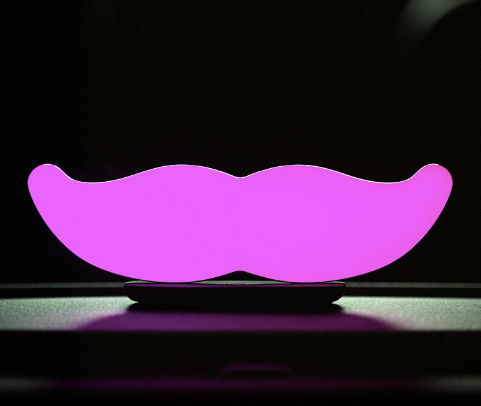
Soon people began associating the pink mustaches with the Lyft brand. For a while the company incorporated it into their logo. They shifted from the car-front ornament to a “glowstache” which lit up inside the car to identify it as a Lyft ride. Ultimately the light stayed but the mustache went.
Lyft has engaged in funky, light-hearted and non-traditional marketing. Lyft’s first ad was animated. More recently Lyft has sponsored branded entertainment like Kevin Hart: Lyft Legend and Undercover Lyft where celebrities like Demi Lovato and David Ortiz drive unsuspecting Lyft riders incognito.
As one of the few people left in the U.S. with neither app on my phone, I sought insight as to whether the brand of rideshare matters to patrons.
I polled friends and connections on Facebook and Twitter and via email about their preference between Uber and Lyft. My highly unscientific study garnered a sum of 14 votes – 11 for Lyft, two for Uber and one who said “same to me.”
Three people preferred Lyft because it was cheaper. One said the brand was more socially and environmentally conscious, and another heard it treated drivers better. Two people cited Uber’s bad management as a reason for their vote for Lyft and another shared an awful experience with Uber.
Yet one who preferred Lyft added a caveat saying that when Lyft isn’t available, she uses Uber as it is more widespread.
These responses got me thinking about what is really driving the ridesharing industry: availability and price.
I’m not saying that people don’t factor their brand impressions into their decisions. But in the effort to get from one place to another, availability and price seem to reign in the moment for many people as they have both apps and can tell you the price differential between the two services.
When both are available and price becomes the determining factor, brand doesn’t matter. These riders are treating on-demand transportation as a commodity.
Brands involved in commodity price wars have a tough time making a profit.
Neither Uber nor Lyft has ever made a profit and it is unclear if they ever will. Lyft reported a loss of $911 million in 2018. Uber posted $997 million in profit, but that included the sale of some assets. Subtract the sales and Uber lost $1.8 billion.
Moreover, the ridesharing industry is young and has low barriers to entry.
On-demand transportation requires little more than the creation of an app and the building of driver and rider communities. Lyft and Uber are spending lavishly to be at the top of the markets they compete in, but new entrants keep coming.
New York City has Via and Juno. Boston has Safr. Upstart Bolt is now besting Uber in Kenya and Poland, and is about to enter London.
And then there is Waze, the Google-owned app that has launched a carpooling service aimed at helping people get to and from work. Riders in the U.S. are charged 58 cents per mile, the IRS reimbursement rate.
The price competition will likely get worse before it abates.
The Economics major in me expects that time and investor impatience will force some of the weaker players to sell to bigger ones or to die off and the industry will consolidate. As the two largest players in the U.S. market, I expect both Uber and Lyft will be consolidators.
Who will win?
Lyft has better defined its brand, is working harder to build community than Uber and is focused on growing their presence in North America. Uber is a brand in adolescence with an identity crisis as it is spread across too many endeavors and geographies.
My money would be on Lyft as the top player in the U.S. if I was in the habit in placing money on brands that have no idea if they will ever be profitable.
What does Uber and Lyft’s fierce competition have to do with your brand? It offers an object lesson on the dangers of competing on price.
There is a difference between being competitive – having a price in the ballpark – and competing on price which means using it as your main competitive lever.
When you compete on price, the only place to go is down. Instead of working your price down, build your brand value up.
The moral of the story is avoid centering your business on a commodity.
It is possible that Dan may think the moral of the story is that we should have thought to create a ride-hailing app after our experience in Paris!
Which ridesharing app do you use? And how do you choose?